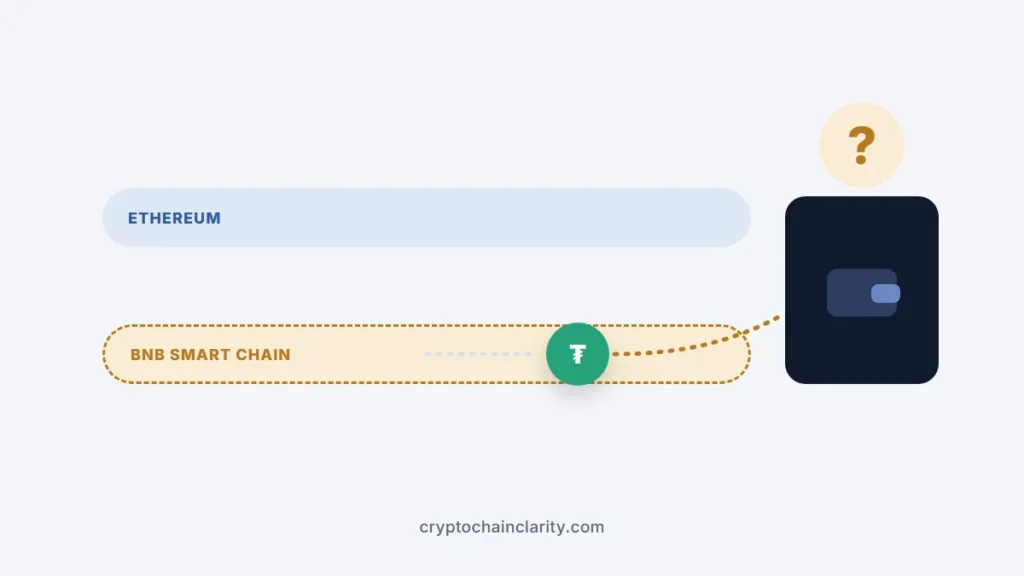
Crypto sent to the wrong address is often, but not always, lost. Blockchain transactions can’t be reversed, so once crypto lands at an address, only whoever controls that address can send it back. What you can do depends on what kind of address it went to: an exchange account with a missing memo tag can usually be fixed; a payment to a stranger’s wallet can only be returned if they choose to; and crypto sent to an address nobody controls is gone for good.
This guide helps you work out which case you’re in, what to do next, and how to protect yourself from address poisoning, the scam behind many “wrong address” losses.
First: was it really sent?
Wallets check addresses before sending. Bitcoin addresses and most modern formats include a checksum, and a single typo usually makes the address invalid, so the wallet refuses to send. If you mistyped and the transaction went through anyway, check carefully what actually happened.
Look up the transaction hash on a block explorer for that network (for example mempool.space for Bitcoin or Etherscan for Ethereum) and note:
- the receiving address exactly as recorded,
- the network used,
- whether the explorer shows a label for that address, such as an exchange name.
If the funds went on the wrong network rather than to the wrong address, see sent crypto to the wrong network instead; that problem is more often recoverable.
Crypto sent to the wrong address: your chances, case by case
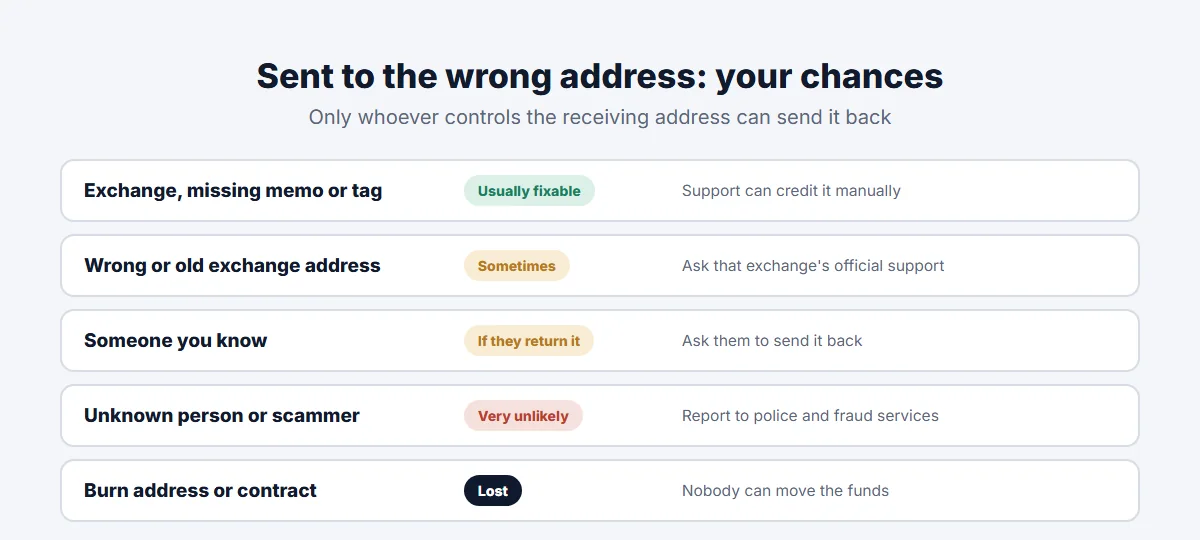
You forgot the memo or tag on an exchange deposit (usually fixable)
Some coins, including XRP, XLM, ATOM and EOS, use one shared deposit address for many exchange customers, plus a memo, tag or destination tag to identify you. If you left it out or entered the wrong one, the funds usually arrive at the exchange but aren’t credited to your account.
Contact the exchange’s support through its official app or website with the transaction hash, amount, coin and your account details. Most exchanges can credit the deposit manually, sometimes after a few days and occasionally for a fee.
You sent to the wrong exchange address (sometimes fixable)
If you sent to an old deposit address, another user’s deposit address, or an address at a different exchange, the receiving exchange controls those keys. Contact its support with full transaction details. It may help if the funds can be clearly traced to you, but it isn’t obliged to, especially if the address belongs to another customer.
You sent to someone else’s personal wallet (only if they return it)
If you know who owns the address, ask them to send it back. If you don’t, there’s no central authority to contact. Some explorers let you leave a public note, but in practice recovery is rare.
You sent to a scammer or an unknown address (very unlikely)
If you were tricked into sending crypto, report it promptly: to your local police, to your country’s fraud reporting service (for example the FBI’s IC3 in the US or Action Fraud in the UK), and to any exchange where the funds were sent from or later moved to. Exchanges can sometimes freeze stolen funds that arrive on their platform, but only when law enforcement or clear evidence is involved.
You sent to a burn address or a contract (lost)
Addresses designed to destroy tokens, and smart contracts with no way to withdraw tokens sent to them, can’t return funds. If you sent tokens directly to a token’s contract address, they’re usually stuck permanently.
Address poisoning: the scam behind many “wrong address” mistakes
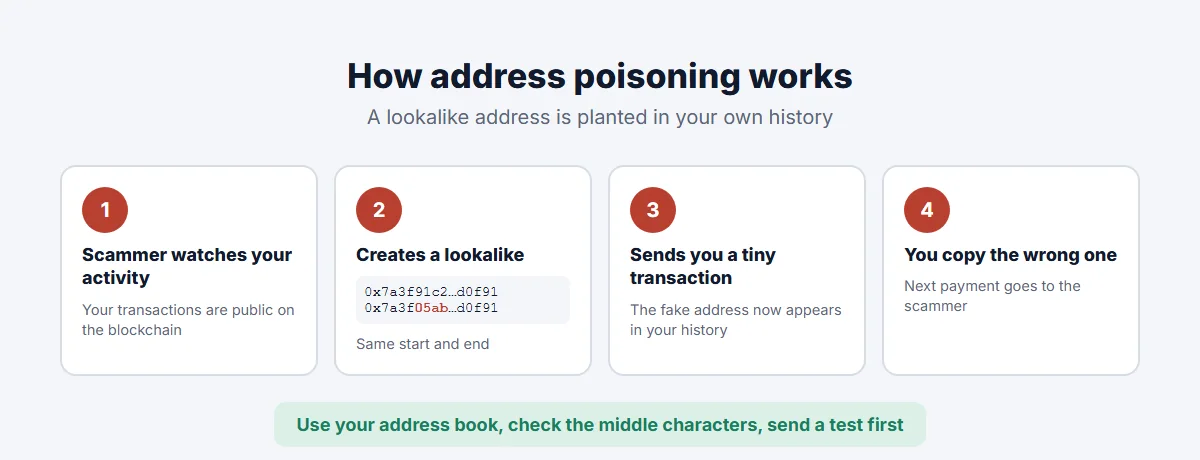
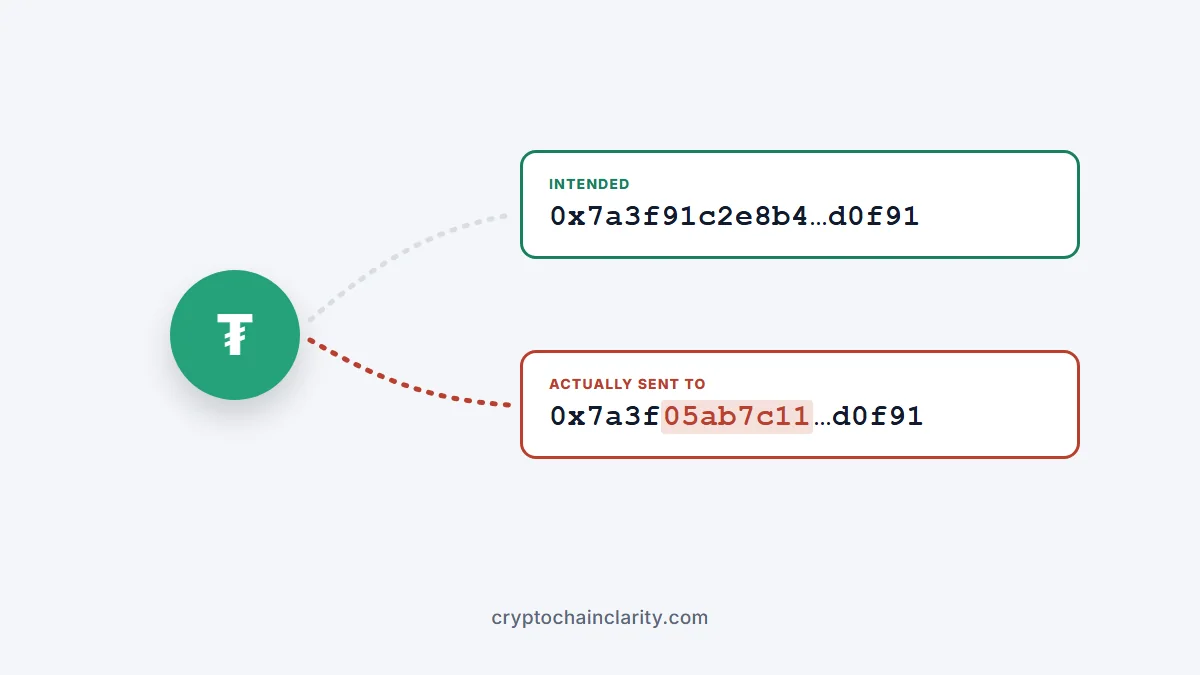
Many people who “sent to the wrong address” actually copied a fake address from their own transaction history. Here’s how the scam works:
- The scammer watches your on-chain activity.
- They generate an address whose first and last characters match one you send to regularly.
- They send you a tiny or zero-value transaction from it, so it appears in your wallet history.
- Next time you copy an address from your history, you pick the fake one.
According to research cited by Elliptic and others, address poisoning has stolen tens of millions of dollars on Ethereum and BNB Smart Chain alone.
To protect yourself:
- Never copy addresses from your transaction history. Use your wallet’s address book or get the address fresh from the recipient or your exchange.
- Check the middle characters, not just the start and end.
- Send a small test before large transfers, and confirm the recipient received it.
- Treat unexpected tiny deposits from unknown addresses as a warning sign.
- With a hardware wallet, verify the address on the device screen.
Beware of recovery scams
After a loss, people offering to “trace and recover” your crypto for an upfront fee will appear in your messages and search results. Legitimate recovery is only possible through the parties who control the receiving address, or through law enforcement. Anyone promising otherwise is almost certainly a scammer. Common crypto scams covers this “recovery scam” pattern.
How to avoid sending to the wrong address
- Use saved addresses or an allowlist for addresses you use regularly.
- Double-check the full address, including the middle, and the network.
- Include memos or tags when the deposit screen asks for them.
- Send a small test first for any new address or large amount.
- On exchanges, turn on withdrawal address allowlists; exchange withdrawal on hold explains the short delay they add.
For a full walkthrough of a safe transfer, see how to move crypto from Coinbase to a hardware wallet.