Here’s how blockchain works in one paragraph: a blockchain is a shared record of transactions that thousands of computers keep identical copies of. New transactions are grouped into blocks. Each block carries a unique fingerprint of the block before it, which links them into a chain. The computers follow the same rules to agree on which block comes next, so no single company is in charge, and changing an old entry would mean redoing every block after it and convincing most of the network to accept the rewrite.
That’s the whole idea. The rest of this guide unpacks each piece with pictures, using Bitcoin and Ethereum as examples, and ends with what blockchains are not good at.
Start with a shared notebook
Imagine a group of friends who lend each other money. Instead of trusting one person to keep the record, everyone keeps their own copy of the same notebook. When someone pays, they announce it to the group, everyone checks the payer actually has the money, and everyone writes it down on the next page.
A blockchain is that notebook, with three improvements:
- Anyone can keep a copy, so there are thousands of them around the world.
- Pages are sealed with maths, so a page that’s been changed is obvious to everyone.
- There’s a fair rule for who writes the next page, so nobody needs to be in charge.
Those three pieces, the network, the chain of blocks and consensus, are how blockchain works.
What’s inside a block
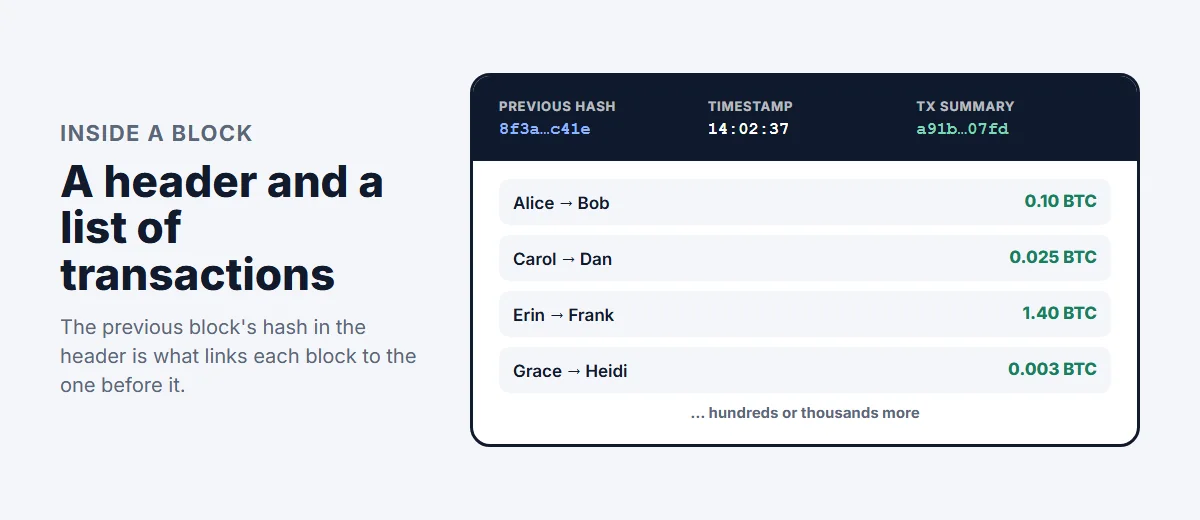
A block is a batch of transactions plus a small header. The header includes:
- the previous block’s hash, which is the link in the chain,
- a timestamp,
- a compact summary of all the transactions in the block, so that changing any one of them changes the summary.
A hash is a short fingerprint calculated from data. Feed in the same data and you always get the same fingerprint; change a single character and you get a completely different one. Bitcoin uses a hash function called SHA-256. You can’t work backwards from a hash to the data, and you can’t find data that gives a chosen hash except by trial and error.
How blockchain works: chaining the blocks
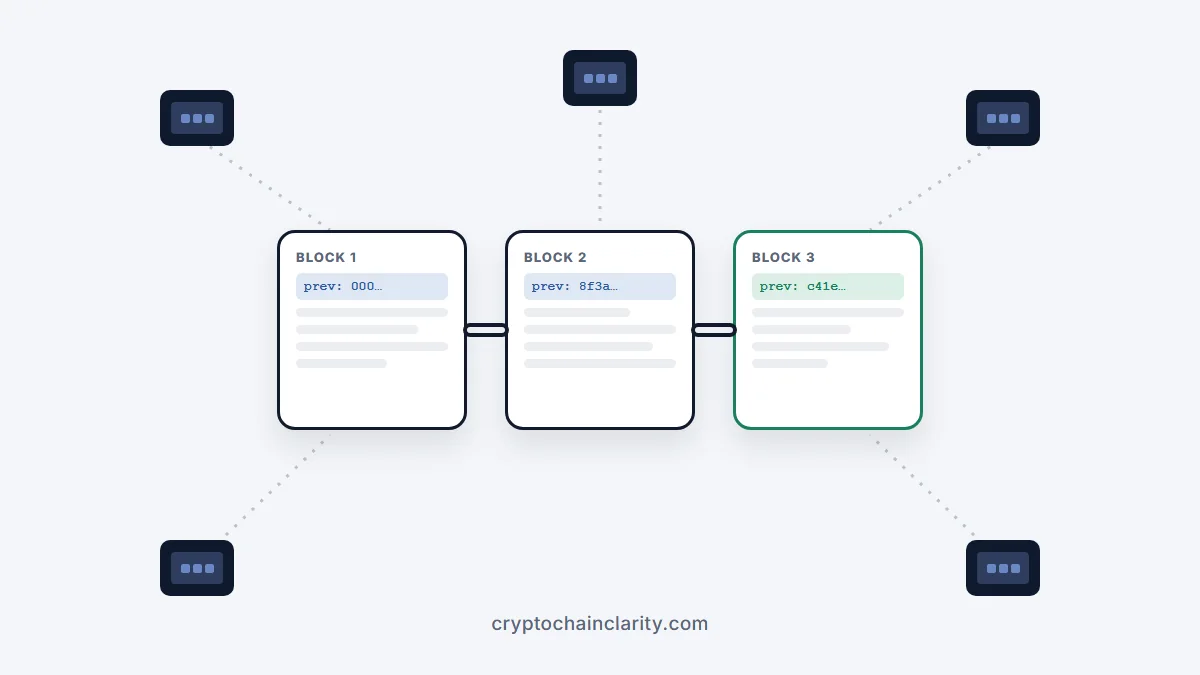
Because every block contains the hash of the one before it, the blocks form a chain going back to the very first one, called the genesis block.
This is the heart of how blockchain works, and what makes the history so hard to tamper with. If someone changed a transaction in an old block, that block’s hash would change. The next block would no longer point to it, so it would have to be rebuilt, and so would the one after, and every block since. On a large network, redoing that work faster than everyone else keeps adding new blocks is practically impossible.
Who adds the next block: consensus
Thousands of computers, called nodes, keep a copy of the chain and check every transaction and block against the same rules. But someone has to propose each new block. The method the network uses to choose who, and to agree on the result, is its consensus mechanism. The two most common are:
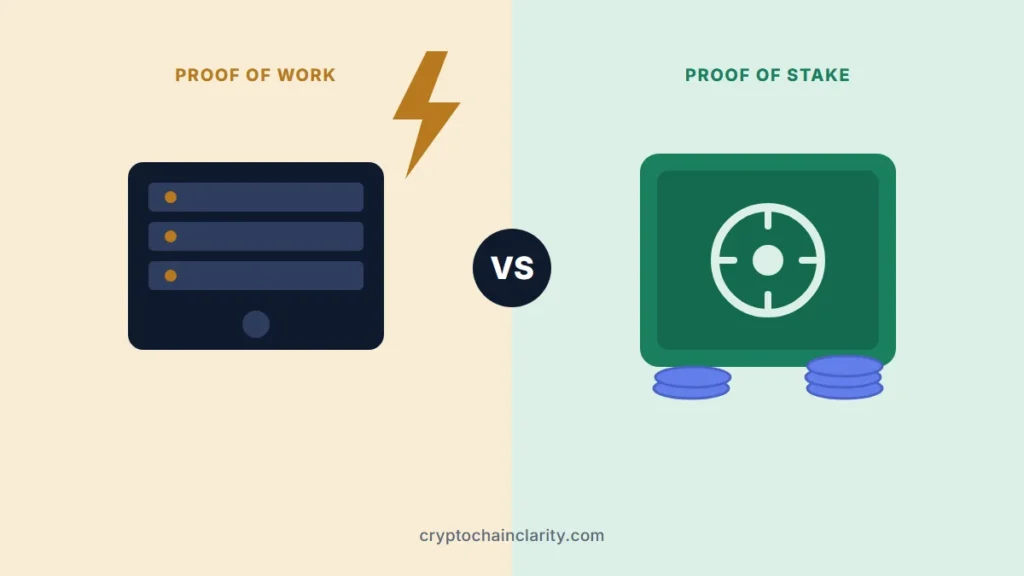
- Proof of work (Bitcoin): computers called miners compete to find a valid hash for the next block by trial and error, using electricity. The winner adds the block and earns new bitcoin plus fees. On average, a new Bitcoin block arrives about every 10 minutes.
- Proof of stake (Ethereum and many others): validators lock up coins as a deposit. The protocol picks one to propose each block, and others vote to confirm it. Cheating can cost a validator part of its deposit. Ethereum produces a block slot every 12 seconds.
Either way, an honest majority decides what the official chain is. Proof of work vs proof of stake compares the two in detail.
The life of a transaction
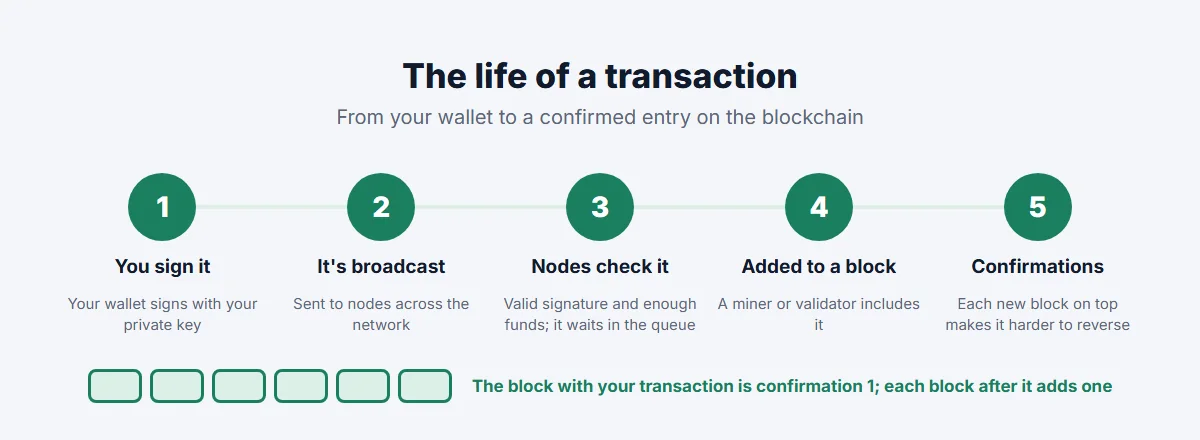
Here’s what happens when you send crypto:
- You sign the transaction in your wallet with your private key. The signature proves you own the coins without revealing the key.
- Your wallet broadcasts it to the network.
- Nodes check it: is the signature valid, and do you have the funds? Valid transactions wait in a queue, often called the mempool.
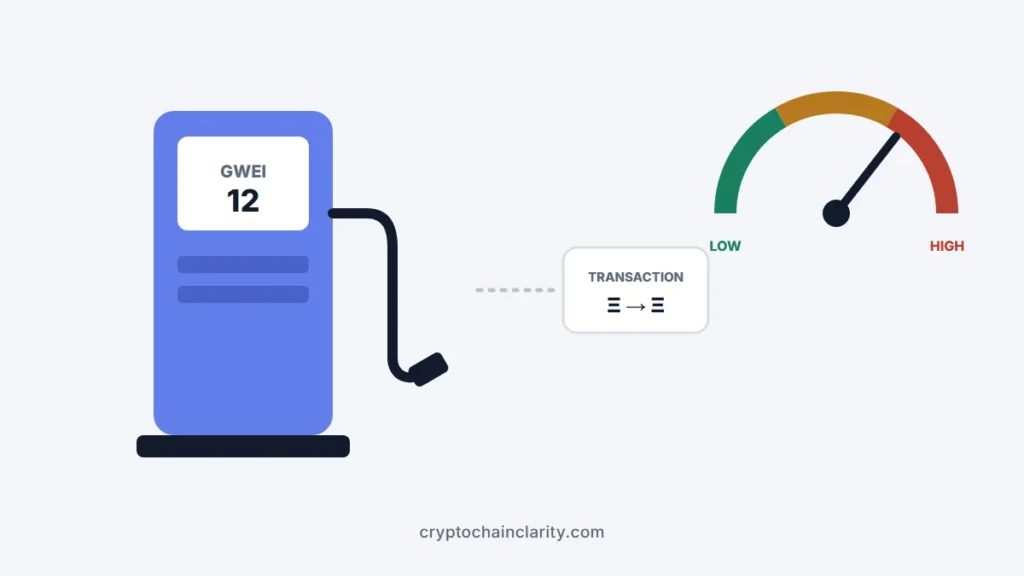
- A miner or validator includes it in a new block, usually picking transactions that pay higher fees first. That’s why fees rise when the network is busy; what are gas fees? explains how that works on Ethereum.
- More blocks are added on top. The block that includes your transaction is its first confirmation, and each block added after it is another. The more confirmations, the harder the transaction is to reverse.
Your wallet doesn’t store coins. It stores the keys that let you sign transactions on the blockchain. Crypto wallets explained covers what that means in practice.
Public, permissionless and transparent
Bitcoin and Ethereum are public blockchains: anyone can run a node, send transactions or look up any address’s history on a block explorer. That transparency is a feature, but it also means your transactions are visible to anyone who links an address to you. Addresses are pseudonymous, not anonymous.
There are also private or permissioned blockchains run by companies or groups, where only approved participants can write. They use similar data structures but rely on trust in the operators, which removes much of what makes public blockchains different.
What blockchains are not good at
Blockchain is often presented as a solution for everything. It isn’t. It has clear limits:
- Speed and capacity. Every node processes every transaction, which limits throughput. That’s why layer 2 networks exist; what is a layer 2? explains how they help.
- Garbage in, garbage out. A blockchain records what it’s told. If someone enters false information, such as a fake product origin, the chain stores it faithfully.
- No undo button. Mistakes like sending to the wrong address usually can’t be reversed by anyone.
- Privacy. Public chains make every transaction visible.
- Cost. Keeping thousands of copies in sync is far less efficient than a normal database. It’s only worth it when the absence of a central authority actually matters.
Where to go next
If this is your first look at crypto, the crypto for beginners guide puts blockchain in context, and what is Bitcoin shows the first and best-known blockchain in action. To see how programs run on a blockchain, read what is a smart contract?. And if you want the original source, Satoshi Nakamoto’s nine-page Bitcoin white paper describes the first blockchain design.