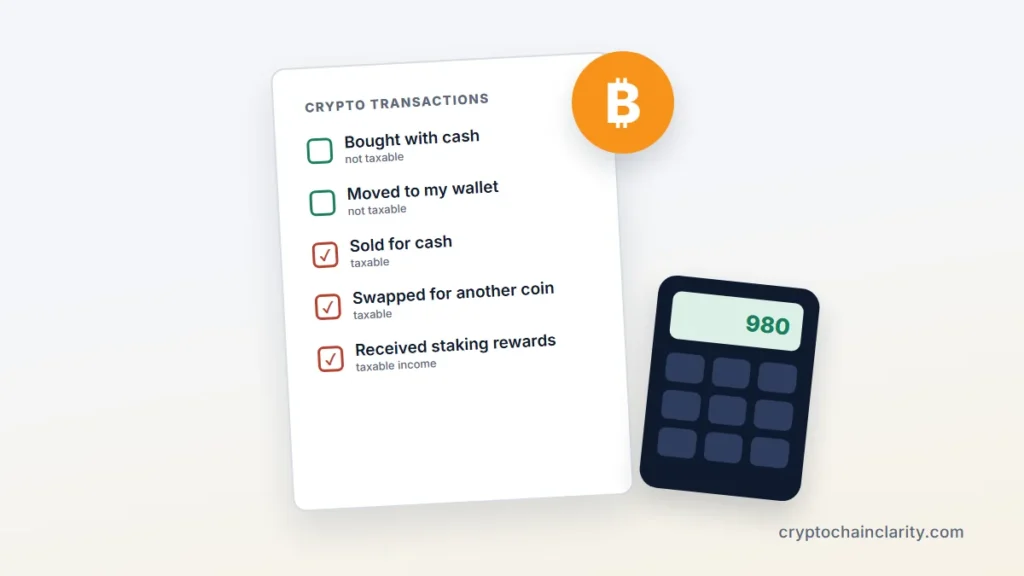
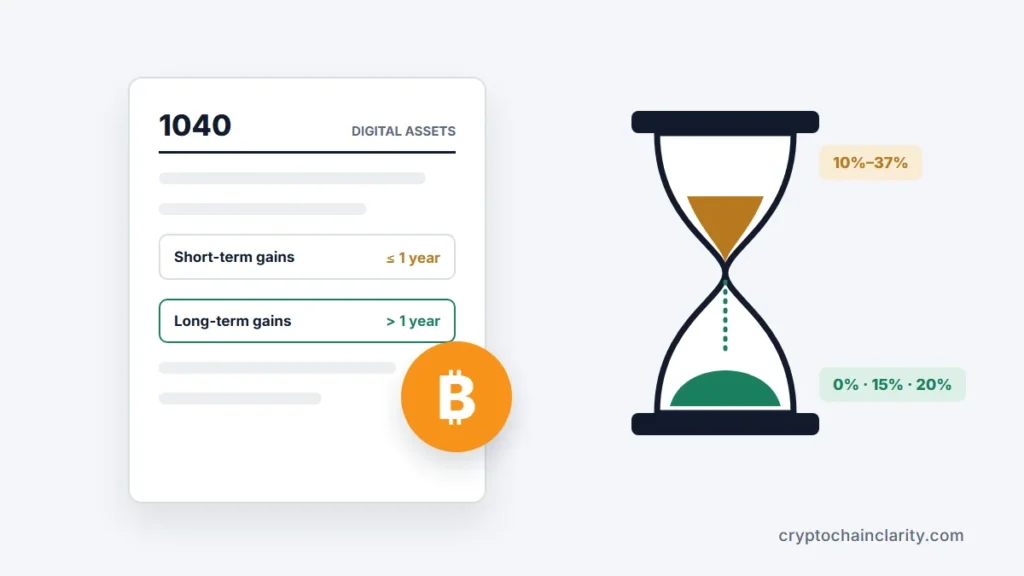
Crypto tax in the UK mostly means Capital Gains Tax. HMRC treats crypto as property, so you may owe tax when you dispose of it: when you sell it, swap it for another coin, spend it, or give it away (except to a spouse, civil partner or charity). The first £3,000 of total gains each tax year is tax-free. Gains above that are taxed at 18% or 24%, depending on your income. Crypto you receive from staking, mining or as pay is usually taxed as income instead.
This guide covers what counts as a disposal, how the allowance and rates work, HMRC’s special matching rules for crypto, and how and when to report.
General information for UK residents, not tax advice. Check GOV.UK or a tax adviser for your situation.
What counts as a disposal
According to HMRC’s guide to tax when you sell cryptoassets, you dispose of crypto when you:
- sell it for pounds or another currency,
- exchange it for a different cryptoasset, including stablecoins,
- use it to pay for goods or services,
- give it away, unless the gift is to your spouse, civil partner or a charity.
Buying crypto with pounds, holding it, and moving it between your own wallets are not disposals. Our crypto taxes guide explains the general logic.
Crypto tax in the UK: the allowance and the rates
Each tax year runs from 6 April to 5 April. For each year:
- Add up your gains and losses from all disposals of crypto and any other chargeable assets, such as shares outside an ISA.
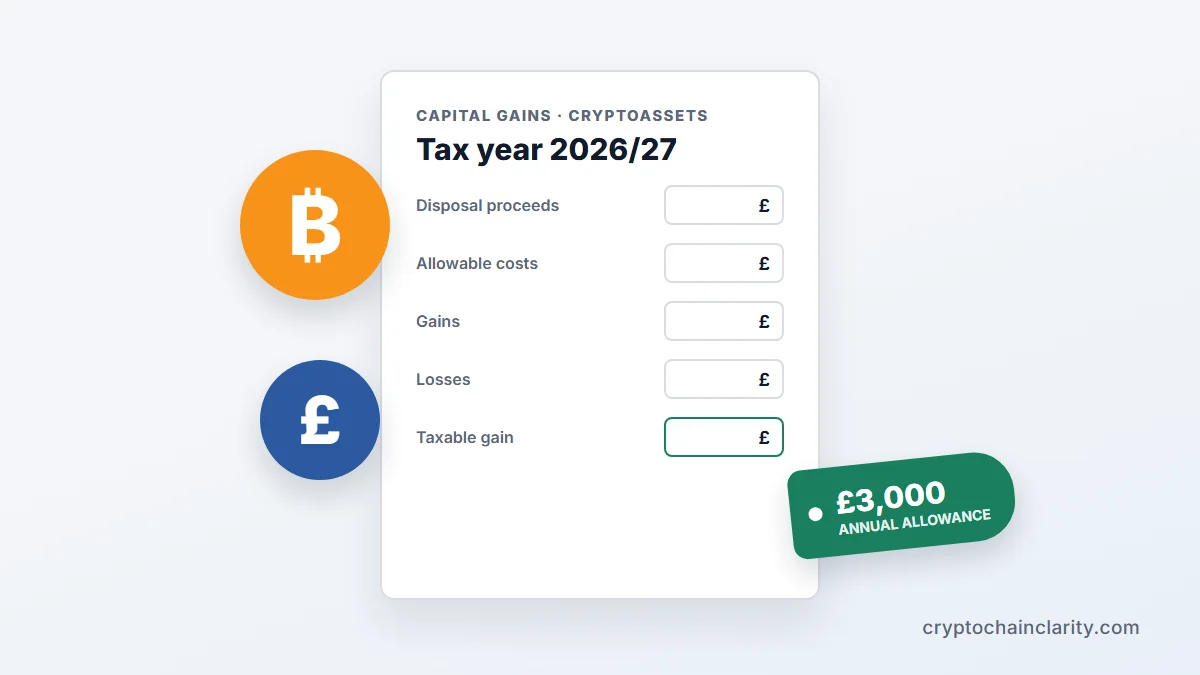
- Deduct your annual exempt amount of £3,000. It applies to all your gains combined, not per asset, and unused allowance can’t be carried forward.
- Tax what’s left at 18% for the part that fits within your unused basic-rate income tax band and 24% above it. These rates have applied since 30 October 2024.
Example: a £10,000 gain
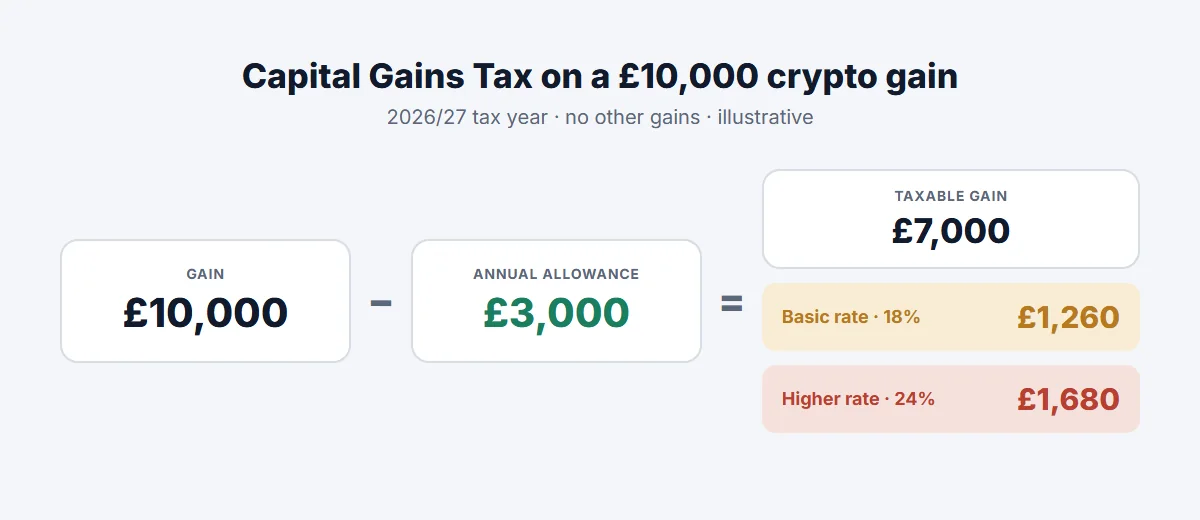
You sell crypto for a gain of £10,000 in the 2026/27 tax year and have no other gains.
- Taxable gain after the allowance: £10,000 − £3,000 = £7,000.
- If all of it fits within your unused basic-rate band: £7,000 × 18% = £1,260.
- If you’re a higher-rate taxpayer: £7,000 × 24% = £1,680.
If part of the gain falls inside the basic-rate band and part above it, each part is taxed at its own rate.
HMRC’s matching rules for crypto
When you’ve bought the same coin several times at different prices, HMRC doesn’t let you pick which coins you sold. Its cryptoassets manual sets the order:
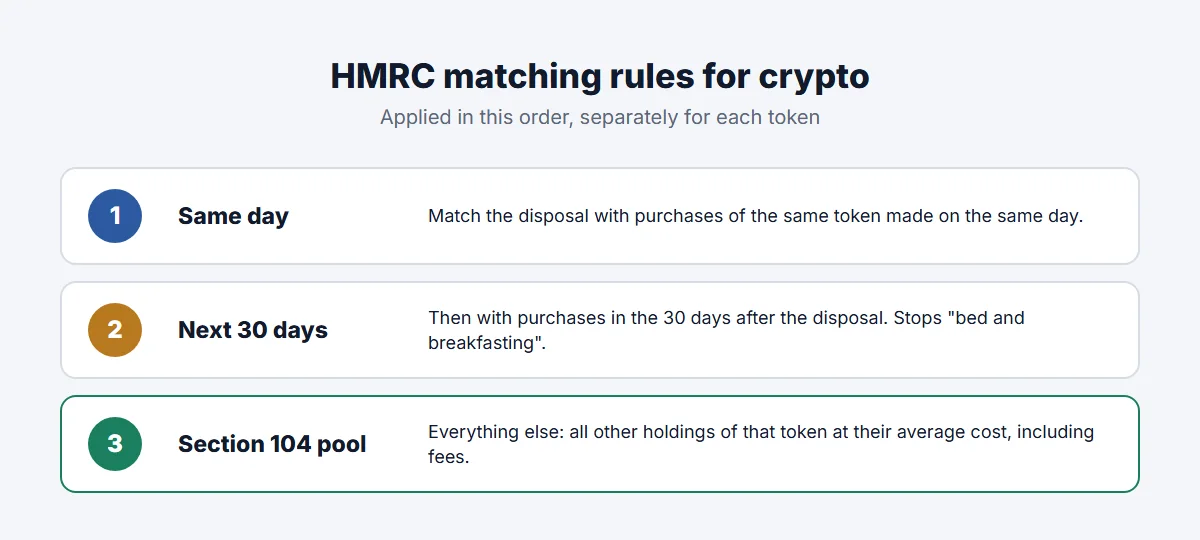
- Same-day rule: a disposal is first matched with any purchases of the same token on the same day.
- 30-day rule: next, with purchases of the same token in the 30 days after the disposal. This stops people selling and immediately rebuying to create a loss on paper (known as “bed and breakfasting”).
- Section 104 pool: anything left is matched against a pool of all your other holdings of that token, at their average cost.
Each token has its own pool, and fees paid when buying are added to the pool’s cost. With many transactions, this is easy to get wrong by hand, which is why many investors use crypto tax software. Best crypto tax software compares options that support HMRC’s rules.
Losses
If you sell crypto at a loss, the loss reduces your other gains in the same tax year. If losses exceed gains, you can carry them forward to future years, but you must report the loss to HMRC within four years of the end of the tax year in which it happened.
If a token becomes worthless, for example because a project collapses, you may be able to make a negligible value claim, which treats it as sold for nothing. Lost private keys or theft are treated differently and depend on the facts, so get advice.
Crypto income: staking, mining and pay
HMRC generally treats crypto received as pay from an employer as employment income, and returns from mining or staking as income (miscellaneous income for most individuals, or trading income if it’s run like a business). Income tax applies to the pound value when you receive it, and that value becomes your cost when you later dispose of the tokens. Do you pay tax on crypto staking rewards? explains this in more detail for the UK, US and Canada.
How to report crypto to HMRC
You need to report if:
- your total gains for the year are above the £3,000 allowance, or
- you’re already in Self Assessment and the total amount you received from disposals of chargeable assets was more than £50,000, even if your gains were below the allowance.
There are two ways to report:
- Self Assessment tax return. Crypto disposals now have their own section on the capital gains pages (SA108). The online deadline, and the deadline to pay, is 31 January after the end of the tax year. For 2025/26, that’s 31 January 2027.
- HMRC’s real-time Capital Gains Tax service, if you’re not otherwise in Self Assessment. You can report a gain soon after making it, up to 31 December after the end of the tax year.
How to report crypto on your tax return walks through the forms step by step.
HMRC is getting your data
From 1 January 2026, UK crypto platforms collect user and transaction details under the international Cryptoasset Reporting Framework and report them to HMRC. The first reports, covering 2026, are due in 2027. Platforms will ask for details such as your National Insurance number to match the data to your tax record.
HMRC has also been sending “nudge” letters to people it believes have undeclared crypto gains. If you’ve missed gains in earlier years, it’s usually better to correct it through HMRC’s digital disclosure service before HMRC contacts you.
How to reduce crypto tax in the UK legally
- Use your £3,000 allowance each year. It can’t be carried forward, so spreading disposals over tax years can help.
- Transfer to a spouse or civil partner before selling: transfers between spouses are tax-neutral, and each person has their own allowance and band.
- Report losses so you can use them against future gains.
- Remember the 30-day rule before selling to realise a loss and rebuying.
If you’d rather avoid managing crypto taxes directly, owning crypto through an ETN is an option, with different trade-offs explained in the cheapest way to buy bitcoin in the UK.