Proof of work vs proof of stake is a choice between two ways for a blockchain to decide who adds the next block. In proof of work, used by Bitcoin, computers compete to solve a puzzle by brute force, spending electricity; the winner adds the block. In proof of stake, used by Ethereum since 2022, participants lock up coins as a deposit; the protocol picks one to propose the block, and dishonest behaviour can cost them part of that deposit.
Both aim at the same thing: making it very expensive to cheat. Proof of work makes cheating cost energy and hardware. Proof of stake makes it cost capital at risk. This guide explains each, compares them side by side, and covers what the difference means for you as a holder.

Why a blockchain needs either
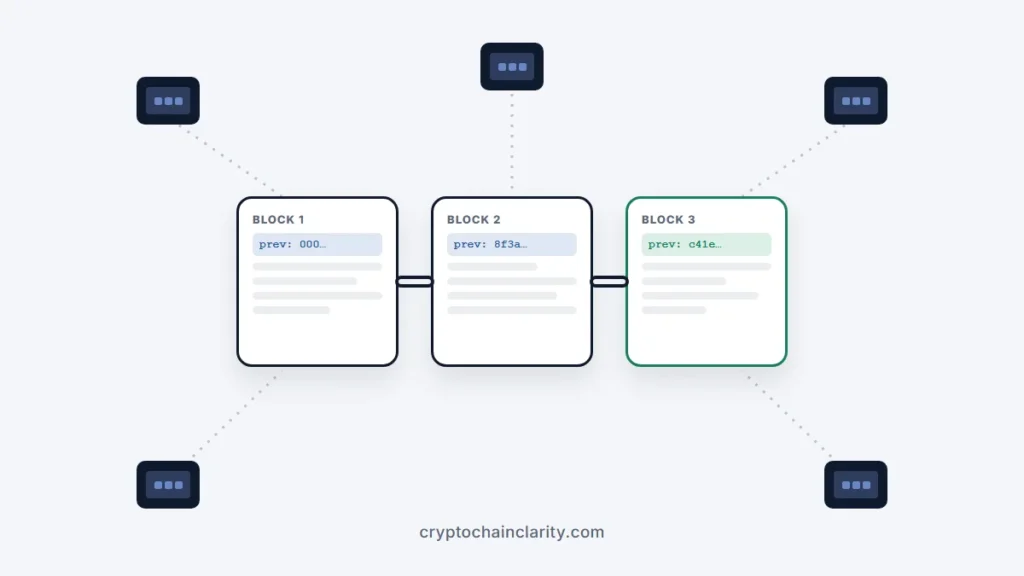
A public blockchain has no company in charge. Thousands of computers keep copies, and someone has to propose each new block without a central authority choosing them. The method used is the consensus mechanism. It has to make it hard for anyone to rewrite history or spend the same coins twice. How blockchain works explains blocks and chains if you need a refresher.

How proof of work works
In proof of work, miners bundle pending transactions into a candidate block, then try to find a number that, combined with the block’s data, produces a hash below a target value. There’s no shortcut: the only way is to try trillions of guesses per second with specialised hardware.
- The first miner to find a valid answer broadcasts the block. Others check it instantly; checking is easy even though finding it was hard.
- The winner earns the block reward (newly created coins) plus the transaction fees.
- Bitcoin adjusts the puzzle’s difficulty about every two weeks, so a new block arrives roughly every 10 minutes no matter how much computing power joins.
To rewrite history, an attacker would need more computing power than the rest of the network combined, a so-called 51% attack. On Bitcoin, that would mean acquiring and powering an enormous amount of mining hardware. The cost is the security.
How proof of stake works
In proof of stake, validators lock up coins (their stake) in the protocol. On Ethereum, running a validator requires 32 ETH. Then:
- Time is divided into 12-second slots. In each slot, one validator is chosen at random to propose a block.
- Other validators check the block and vote (attest) that it’s valid.
- Once enough of the total stake votes for a checkpoint, blocks become finalized and can’t be reverted without destroying a large amount of stake.
Validators earn rewards for doing their job and can be slashed, losing part or all of their stake, for provable misbehaviour such as proposing two conflicting blocks. According to ethereum.org, a lone slashing costs a small fraction of the stake, while a coordinated attack involving many validators can destroy their entire deposits.
You don’t need 32 ETH to take part: exchanges and staking services pool smaller amounts. What is crypto staking? explains the options and their risks.
Proof of work vs proof of stake compared

| Proof of work | Proof of stake | |
|---|---|---|
| What secures it | Computing power and electricity | Coins locked as a deposit |
| Who adds blocks | Miners | Validators |
| Energy use | Very high | Very low |
| Cost of an attack | Buying and running most of the network’s hardware | Acquiring a large share of the staked coins |
| Penalty for cheating | Wasted electricity and lost rewards | Slashing: losing part or all of the stake |
| Entry barrier | Specialised hardware and cheap power | Holding coins (or using a pool) |
| Track record | Bitcoin since 2009 | Ethereum since 2022; many newer chains |
| Examples | Bitcoin, Litecoin, Dogecoin | Ethereum, Cardano, Solana |
The energy question
This is the most visible difference. Ethereum’s switch from proof of work to proof of stake in September 2022, known as the Merge, cut its electricity use by more than 99.98%, according to estimates cited on ethereum.org’s energy page. On the same page, Bitcoin’s annual consumption is estimated at well over 100 terawatt-hours, comparable to a mid-sized country.
Bitcoin supporters argue the energy isn’t wasted: it’s what makes the record so costly to attack, and miners increasingly use surplus or stranded power. Critics argue that a similar level of security can be achieved with far less energy. Both views are common, and it’s worth understanding each rather than taking sides blindly.
Security and decentralisation trade-offs
Neither system is risk-free:
- Proof of work tends to concentrate around cheap electricity and large mining pools. A few pools often produce a large share of blocks, although individual miners can switch pools.
- Proof of stake can concentrate around large holders and big staking services. If a handful of providers control most of the stake, they gain influence over the network.
- Proof of work has a longer history and a simpler security model. Proof of stake is more complex, with more rules that have to work correctly.
In practice, both Bitcoin and Ethereum have operated for years without a successful attack on their consensus.
What it means for you as a holder
- Holding bitcoin doesn’t earn anything by itself; rewards go to miners. Holding ether can earn staking rewards if you choose to stake, with the risks that come with it.
- Staking rewards are generally taxable income when received in the US, UK and Canada; see tax on crypto staking rewards.
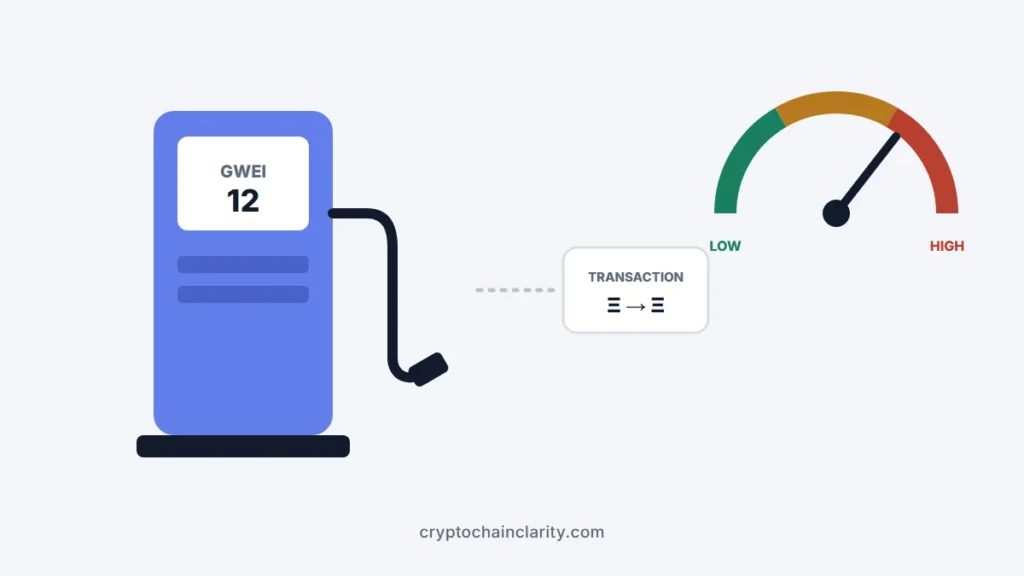
- The consensus mechanism affects transaction speed and fees only indirectly. Ethereum’s fees, for example, depend mostly on demand for block space, explained in what are gas fees?.
For a broader comparison of the two biggest networks, see Bitcoin vs Ethereum.