

Gas fees are what you pay to have a transaction processed on Ethereum and similar blockchains. Every action, from sending ETH to swapping tokens, uses a certain amount of computing work, measured in gas. You pay for that gas in the network’s own coin, ETH on Ethereum. When lots of people want to use the network at once, the price per unit of gas rises, and so does your fee.
So gas fees are high sometimes for two reasons: demand (a busy network) and complexity (some transactions need much more gas than others). This guide explains how the fee is worked out, why it jumps, and how to pay less.
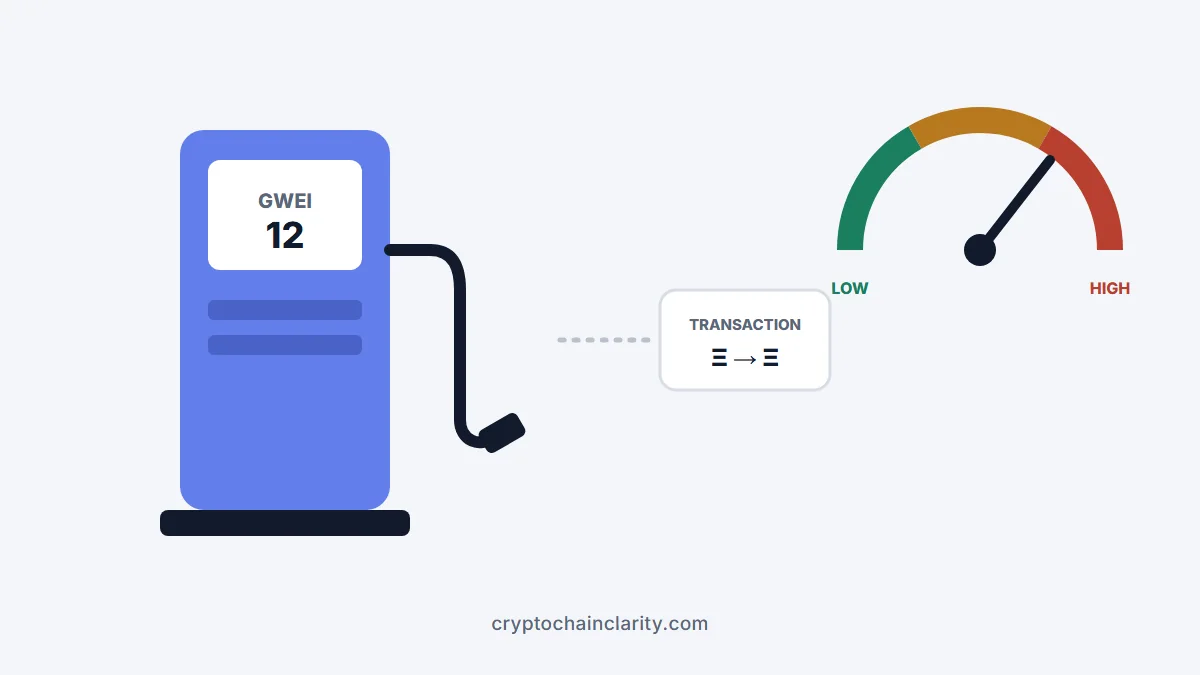
Why blockchains charge gas fees
Every node on Ethereum has to run every transaction, so the network can only process a limited amount of work per block. Gas fees do two jobs:
- They ration limited space. When more people want to transact than a block can hold, fees decide who goes first.
- They stop spam and runaway programs. If computing were free, anyone could flood the network or run a program that never ends.
Bitcoin also has transaction fees, but they’re based on the size of the transaction in bytes rather than “gas”. The word gas, and the fee mechanics below, are specific to Ethereum and the many networks built like it.
How gas fees are calculated
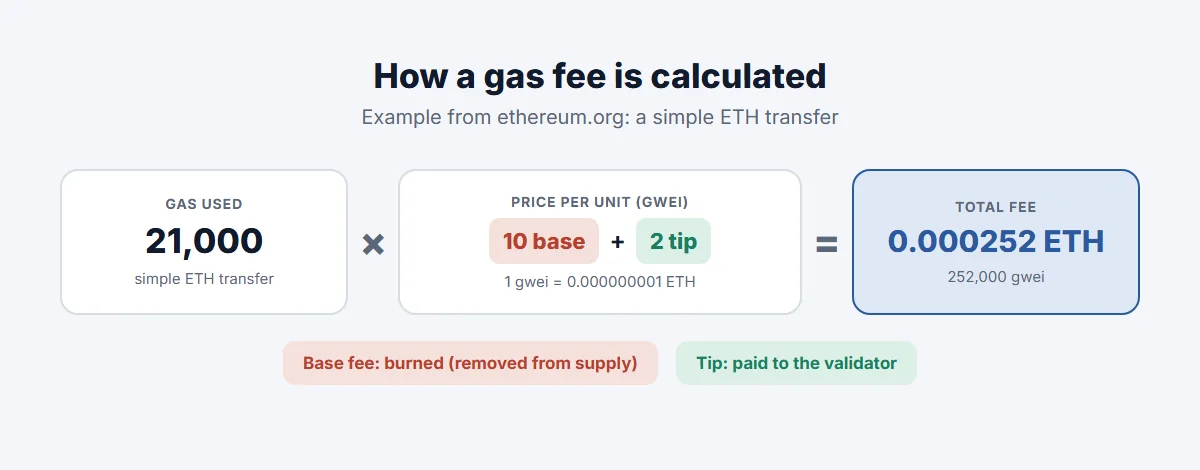
The formula is:
Fee = gas used × (base fee + priority fee)
- Gas used depends on what you’re doing. A simple ETH transfer uses 21,000 gas. Swapping tokens or interacting with a smart contract uses more, often several times as much.
- The base fee is set by the network for each block, in gwei. One gwei is one-billionth of an ETH. The base fee is burned, removing that ETH from circulation.
- The priority fee (or tip) goes to the validator who includes your transaction, and encourages them to pick it.
Using the example from ethereum.org’s gas documentation: a transfer using 21,000 gas, with a base fee of 10 gwei and a tip of 2 gwei, costs 21,000 × 12 = 252,000 gwei, or 0.000252 ETH. What that is in dollars depends on ETH’s price at the time.
Your wallet works all of this out for you and shows the estimated fee before you confirm. Many wallets offer “slow”, “normal” and “fast” options, which mainly change the tip.
The gas limit
When you send a transaction, your wallet also sets a gas limit: the maximum gas you’re willing to use. If the transaction needs less, you only pay for what’s used. If it runs out of gas, it fails, and you still pay for the work done. This is why a failed transaction still costs a fee. Leave the gas limit on your wallet’s suggested value unless you know what you’re doing.
Why gas fees are so high sometimes
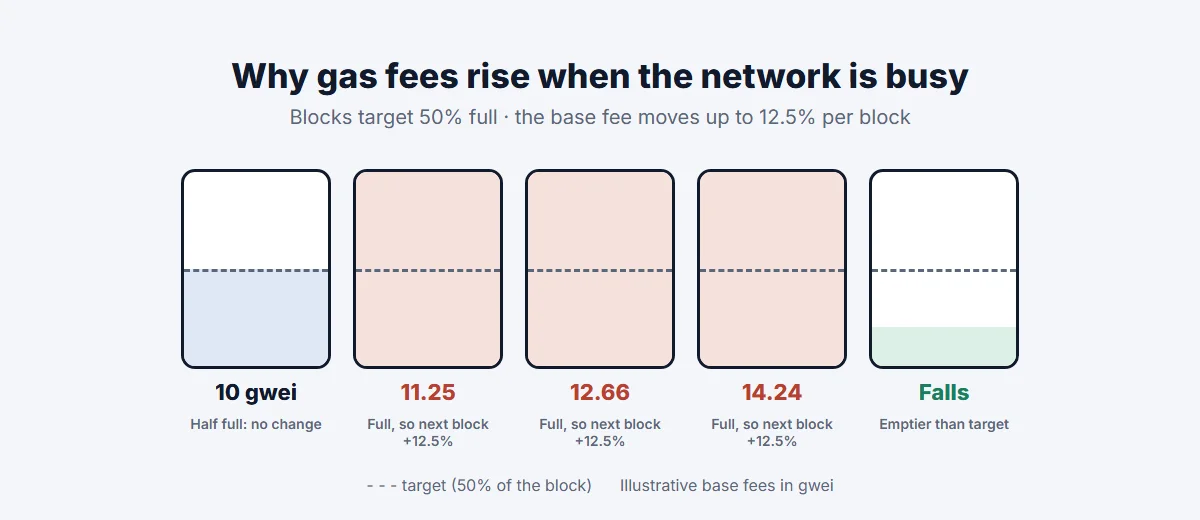
Each block has a target size of half its maximum capacity. After every block:
- if the block was fuller than the target, the base fee goes up, by up to 12.5%,
- if it was emptier, the base fee goes down.
Several blocks in a row of high demand compound those increases, so fees can multiply within minutes. Common causes of spikes:
- Market turmoil, when many people rush to trade or move funds at once.
- Popular launches, such as a hyped token or NFT release, where thousands compete to get in first.
- Complex transactions: a multi-step DeFi trade can use many times the gas of a simple transfer, so it feels expensive even on a quiet day.
When demand falls back, the base fee drops just as quickly. That’s why waiting an hour can make a big difference.
How to pay less in gas fees
- Check the current price first. Gas trackers, including the one built into many wallets and block explorers, show the base fee right now. Fees are often lower at weekends and during quieter hours.
- Use a layer 2 network. Networks such as Arbitrum, Optimism and Base process transactions off the main Ethereum chain and settle them in batches, usually for a small fraction of the cost. What is a layer 2? explains how they work and what to check before moving funds.
- Don’t overpay the tip. On a quiet network, the “slow” or default option is usually confirmed within minutes.
- Batch your actions. Moving crypto once instead of in several small transfers saves repeated fees.
- Withdraw from exchanges on cheaper networks when the exchange and your wallet support them. Sending on the wrong network can lose funds, so check carefully; crypto exchange fees explained covers withdrawal fees and networks.
What if your transaction is stuck?
If you set a low fee and the base fee rose afterwards, your transaction may wait in the queue. You can usually speed it up by resubmitting it with a higher fee, or cancel it by sending a zero-value transaction with the same nonce and a higher fee. Why is my Ethereum transaction pending? walks through both.
Gas fees in context
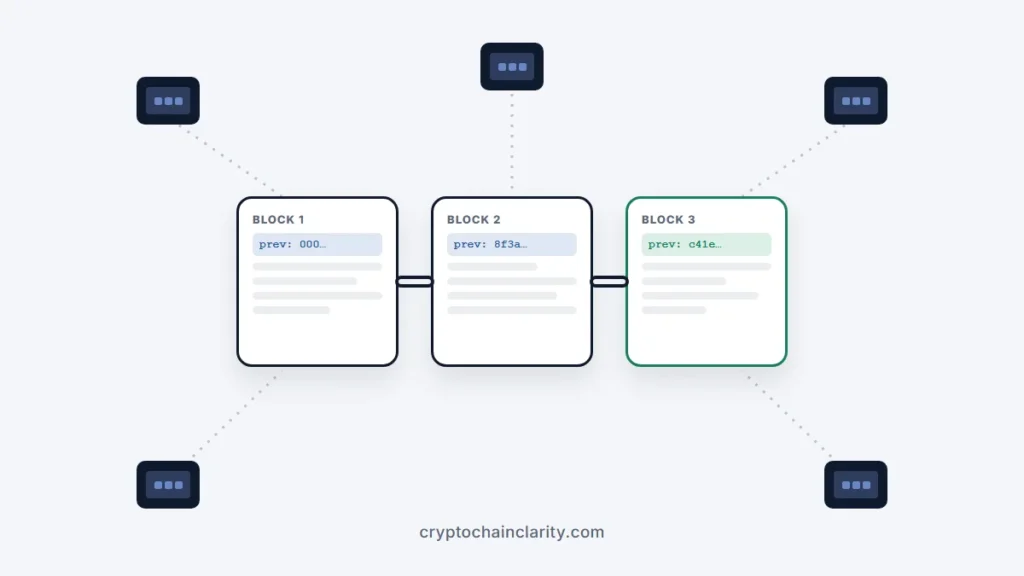
Gas fees are part of how Ethereum stays secure and decentralised: every node checks every transaction, and limited block space has to be shared fairly. Layer 2 networks and upgrades to Ethereum aim to keep the main chain secure while moving everyday activity somewhere cheaper. For the bigger picture of how blocks and transactions fit together, see how blockchain works.
Pingback: What Is a Smart Contract? Real Examples You Already Use