The cheapest way to buy bitcoin in the US depends on how you buy it. For a one-time purchase, it’s usually a limit order on an exchange’s advanced screen, such as Kraken Pro or Coinbase Advanced, funded by a free bank (ACH) transfer. For regular purchases, it’s a zero-fee recurring buy, which River and Cash App both offer. The expensive routes are the ones most beginners use first: the simple “Buy” button paid by debit card, and bitcoin ATMs.
Below are the options ranked by cost, worked examples with published fees, and the details that decide which is cheapest for you.
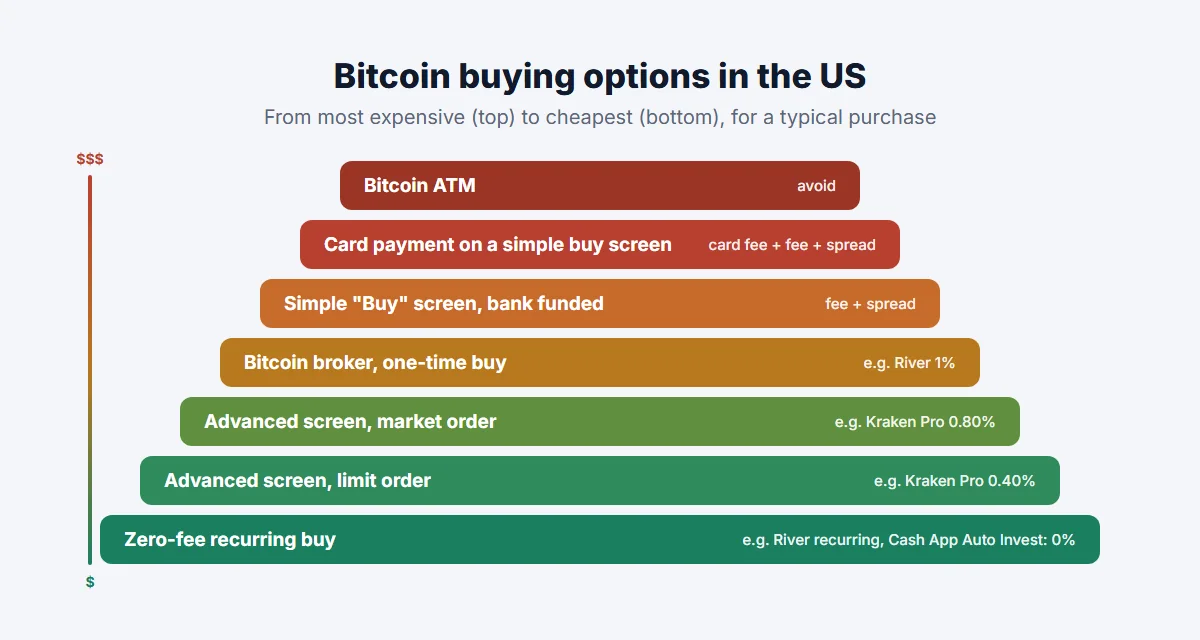
US bitcoin buying options, ranked by cost
| Route | Example | Published cost (Nov 2026) | Best for |
|---|---|---|---|
| Zero-fee recurring buy | River recurring buys; Cash App Auto Invest | River: 0% after the first 7 days; Cash App: no fee and no spread | Buying a fixed amount every week or month |
| Limit order on an advanced screen | Kraken Pro, Coinbase Advanced | Kraken Pro: 0.40% maker at entry tier; no built-in spread | One-time purchases of any size |
| Market order on an advanced screen | Kraken Pro, Coinbase Advanced | Kraken Pro: 0.80% taker at entry tier | When you want the order filled now |
| Bitcoin-focused broker, one-time buy | River, Strike | River: 1.00% under $1M; Strike: tiered fee plus a spread | Simplicity with bitcoin-only apps |
| Simple “Buy” screen of a big exchange | Coinbase, Kraken app | Spread plus a fee (Kraken: 1% plus spread) | Very small first purchases |
| Debit or credit card | Most apps | Card fees on top of the above | Avoid if you can wait for a transfer |
| Bitcoin ATM | Kiosks in stores | Typically far higher than any app | Avoid |
Fees change regularly. The figures above come from each company’s own fee pages: Kraken’s fee schedule, River’s fee guide and Cash App’s bitcoin fees page. Coinbase Advanced also uses maker and taker tiers, which it changed during 2026, so check its current rates before comparing.
What a $1,000 purchase costs
Using the published rates above for a single $1,000 purchase funded by bank transfer:
- Kraken Pro, limit order (0.40%): $4.
- Kraken Pro, market order (0.80%): $8.
- River, one-time buy (1.00%): $10.
- Kraken instant buy (1% plus spread): $10 plus whatever spread is built into the quote.
If you paid by debit card on a simple buy screen, the card fee would come on top. On a purchase this size, the gap between the cheapest and most expensive app route can easily be $20 to $40.
What regular buying costs
If you buy $100 every week, the trading fee is what matters most, because you pay it 52 times a year.
- River recurring buys: 0% after the order has been running for 7 days, according to River’s support pages.
- Cash App Auto Invest, Round Ups or direct deposit: Cash App says these carry zero fees and zero spread.
- Strike recurring buys: a tiered fee plus a spread built into the price, as Strike explains in its fee FAQ.
- Recurring buys on a big exchange’s simple screen: usually charged like any other simple buy, with a fee and spread every time.
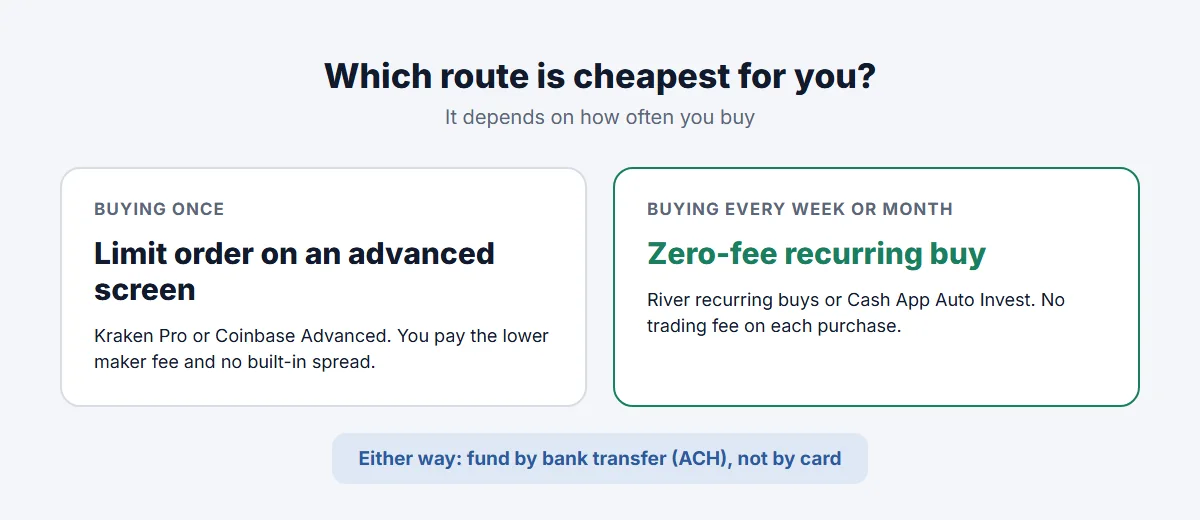
For a regular plan, the cheapest way to buy bitcoin is a zero-fee recurring buy: it beats even the cheapest order book, because there’s no fee at all. Dollar-cost averaging in crypto explains how to set one up and why it suits most beginners.
The fees people forget
Withdrawal fees. Moving bitcoin to your own wallet costs a network fee, and some platforms add their own margin. Because it’s usually a fixed amount, it’s cheaper to withdraw once in a while than after every small purchase. Cash App, for example, lists standard-speed bitcoin withdrawals as free of its own fees, while network fees can still be passed on.
The spread. An app that advertises “no fees” still earns from the difference between its price and the market price. Compare how much bitcoin you receive for the same dollars, not the fee line.
Card fees. Paying by debit card is fast but usually the most expensive way to fund a purchase. Credit cards can also be treated as a cash advance by your bank, with extra fees and interest.
Bitcoin ATMs. Kiosks are convenient but charge much more than apps, and they’re a favorite tool of scammers who pressure victims to deposit cash. If anyone tells you to pay them through a bitcoin ATM, it’s a scam. Common crypto scams explains how these schemes work.
Cheapest isn’t the only thing to check
A few cents saved isn’t worth a platform you can’t rely on. Before choosing:
- Make sure it’s licensed in your state. Not every app operates everywhere; Kraken, for example, isn’t available to New York residents.
- Check that you can withdraw to your own wallet. If you plan to self-custody, avoid apps that make it difficult or expensive.
- Consider bitcoin-only vs multi-coin. River, Strike and Cash App focus on bitcoin. Exchanges like Kraken and Coinbase let you buy other coins too.
- Think about where the coins will live. Small amounts can stay on a reputable platform; larger long-term holdings are safer in a hardware wallet.
If you’d rather hold bitcoin in a regular brokerage or retirement account without managing coins at all, a spot bitcoin ETF is another route, with an annual expense ratio instead of trading fees. How bitcoin ETFs work compares that option with owning bitcoin directly.
The cheapest way to buy bitcoin, in short
- Buying once? Fund by ACH and place a limit order on Kraken Pro or Coinbase Advanced.
- Buying every week or month? Use a zero-fee recurring buy such as River’s or Cash App’s Auto Invest.
- Avoid debit card purchases on simple buy screens and, above all, bitcoin ATMs.
New to the whole process? How to buy crypto safely for the first time covers account security and every step before your first order, and crypto exchange fees explained breaks down each type of fee.