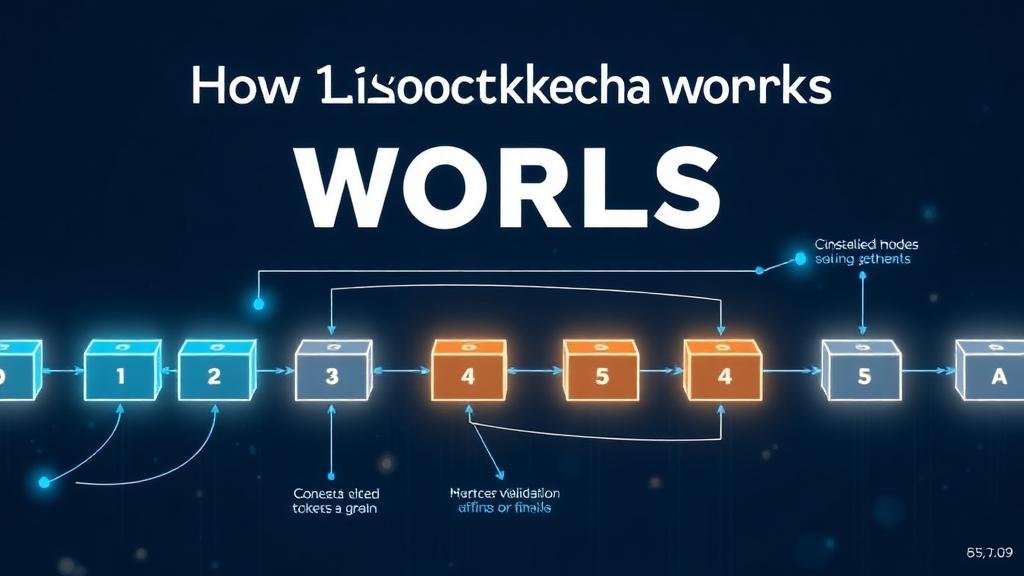
“Decentralized” is one of the most used — and most misunderstood — words in crypto. It appears in project descriptions, marketing materials, and technical discussions. But what does it really mean in practice?
Understanding decentralization in cryptocurrency requires moving beyond slogans and looking at how systems are structured, who has control, and where decision-making power sits.
The Basic Idea
At its simplest, decentralization means no single entity has full control over a system.
In traditional financial systems, banks, companies, or governments often serve as central authorities. They manage accounts, process transactions, and make key decisions.
Cryptocurrency networks were designed to operate differently. Instead of relying on one central operator, they use distributed networks of participants who follow shared rules.
How This Works Technically
In many blockchain systems, thousands of computers (often called nodes) help maintain the network. They validate transactions, store copies of the ledger, and follow consensus rules.
Because many independent participants are involved, changing the system or manipulating records becomes more difficult. Control is spread across the network rather than concentrated.
This technical structure is a key part of decentralization.
Decentralization Is Not All or Nothing
One important reality is that decentralization exists on a spectrum.
A network may be decentralized in how transactions are validated but still rely on centralized elements like development teams, user interfaces, or infrastructure providers.
Some projects are more decentralized than others. Evaluating claims requires looking at different layers, not just labels.
Governance and Decision-Making
Beyond technical structure, decentralization also applies to governance — how changes are proposed and implemented.
In some systems, decisions involve broad community participation through voting or consensus processes. In others, a smaller group of developers or organizations plays a stronger role.
True decentralization aims to distribute influence rather than concentrate it. But achieving that balance can be complex.
Why Decentralization Matters
The appeal of decentralization in cryptocurrency often connects to resilience and independence.
A system without a single point of control may be more resistant to censorship, single-point failures, or unilateral rule changes. Users can participate without needing approval from a central authority.
This doesn’t eliminate all risk, but it changes how power and responsibility are distributed.
Trade-Offs Come With It
Decentralization also introduces trade-offs.
Decision-making can be slower when many participants are involved. Coordination may be harder. Upgrades can require broad agreement. User experience may be less streamlined than centralized services.
In many cases, decentralization means accepting complexity in exchange for reduced reliance on single entities.
Perception vs. Reality
Some projects use the term “decentralized” loosely. Marketing may highlight the idea while important parts of the system remain controlled by a few actors.
Understanding decentralization requires asking practical questions:
Who runs the nodes?
Who controls upgrades?
Where is key infrastructure hosted?
How are disputes handled?
These questions reveal how decentralized a system truly is.
Why It Still Involves People
Even decentralized systems are built and maintained by humans. Developers write code. Communities discuss changes. Infrastructure is managed.
Decentralization redistributes control; it doesn’t remove human influence entirely. Governance models, incentives, and transparency play major roles.
Why This Matters for U.S. Readers
In the United States, financial and digital systems are often built around centralized institutions. Decentralized models introduce a different way of organizing trust and control.
Understanding decentralization in cryptocurrency helps readers see why blockchain systems are structured the way they are and how that structure affects risk, access, and participation.
A Balanced View
Decentralization is not a magic solution. It doesn’t guarantee fairness, security, or success. But it changes how systems operate by reducing reliance on single authorities.
Some applications benefit greatly from this model. Others may work better with more centralized structures. The right balance depends on the problem being solved.
The Bottom Line
Decentralization in cryptocurrency refers to distributing control, validation, and governance across many participants rather than concentrating it in one entity.
It shapes how networks function, how decisions are made, and how resilient systems can be. But it also introduces complexity and trade-offs.
Understanding what decentralization actually means helps cut through buzzwords and focus on how digital systems are really built — and why that structure matters.