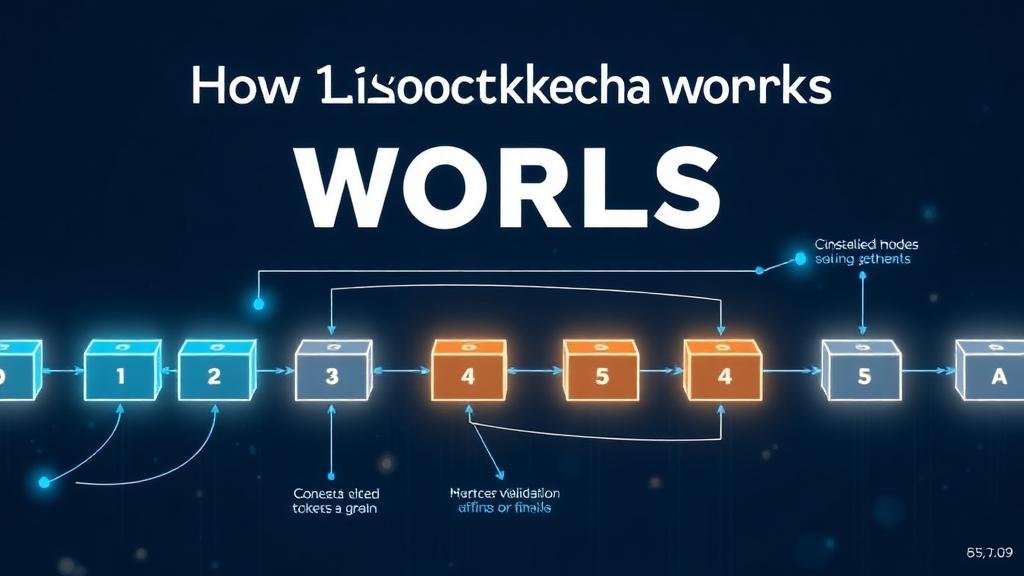
If blockchains operate without a central authority, a natural question follows: how do thousands of independent computers agree on what is true?
Who decides which transactions are valid? Who prevents double-spending? How does the system avoid chaos?
Understanding blockchain consensus mechanisms explained means looking at the rules that allow distributed networks to reach agreement — not through trust in one party, but through shared processes.
The Problem Consensus Solves
In traditional systems, a central database or authority keeps records. If there’s a dispute, the central operator decides.
Blockchains are different. Many independent participants maintain copies of the ledger. Without a central referee, the network needs a method to decide which version of events is correct.
Consensus mechanisms are those methods. They are the protocols that keep everyone aligned.
Agreement Without a Boss
Consensus doesn’t mean every participant votes on every detail. Instead, networks follow structured rules that determine how new blocks of transactions are added.
Participants verify information and follow the same procedures. If someone tries to introduce invalid data, others reject it based on shared rules.
This creates coordination at scale without relying on a single authority.
Proof of Work: Competition Through Computation
One of the earliest consensus models is Proof of Work.
In this system, participants use computing power to solve cryptographic puzzles. Solving a puzzle allows a new block to be added to the chain. Other nodes verify the solution before accepting it.
This approach makes attacking the network expensive because altering records would require significant computational resources.
It’s effective but can be energy-intensive, which has sparked debate and innovation in other methods.
Proof of Stake: Participation Through Commitment
Another widely used approach is Proof of Stake.
Instead of relying on computational competition, participants lock up digital assets as a form of commitment to the network. Those who help validate transactions are chosen based on defined rules.
If they act dishonestly, they risk losing part of their stake. This creates an economic incentive to behave properly.
Proof of Stake often aims to reduce energy use while maintaining security.
Different Approaches, Same Goal
Beyond these two models, there are other variations. Each attempts to balance security, efficiency, and decentralization in different ways.
What they share is a common purpose: preventing bad actors from rewriting history while allowing the network to function smoothly.
Consensus mechanisms are not one-size-fits-all. They reflect design choices about how a system should operate.
Why Consensus Matters for Security
Without consensus, a blockchain would be just a collection of disconnected databases. Agreement mechanisms ensure that everyone sees the same transaction history.
They help prevent:
Double-spending
Unauthorized changes
Fraudulent blocks
By requiring participants to follow shared rules, the system creates a reliable record even among parties that don’t know or trust each other.
Trade-Offs Are Inevitable
Every consensus model involves trade-offs.
Some prioritize security and resilience but may be slower. Others focus on efficiency but require different trust assumptions. Network size, decentralization, and resource use all influence design.
Understanding these trade-offs helps explain why different blockchains choose different mechanisms.
The Human Element Still Exists
Although consensus mechanisms are technical, people design and maintain these systems. Communities debate upgrades, improve protocols, and adjust parameters over time.
The rules may be automated, but governance and evolution remain human-driven.
Why This Matters for U.S. Readers
In the United States, many digital systems rely on trusted institutions to maintain records. Blockchain consensus offers a contrasting model — agreement without centralized control.
This idea connects to broader discussions about trust, transparency, and how digital infrastructure can operate at scale.
Understanding blockchain consensus mechanisms explained helps readers see how blockchains function beyond just price or investment.
A Balanced View
Consensus mechanisms don’t make blockchains perfect. They reduce certain risks but introduce design challenges and ongoing debates.
They are foundational technology, not magic solutions. Their effectiveness depends on how well they align incentives and manage trade-offs.
The Bottom Line
Consensus mechanisms are the processes that allow distributed blockchain networks to agree on transaction history without a central authority.
Whether through computational work, economic staking, or other models, these systems create shared trust in a decentralized environment.
They form the backbone of how blockchains operate — turning a collection of independent participants into a coordinated, functioning network.