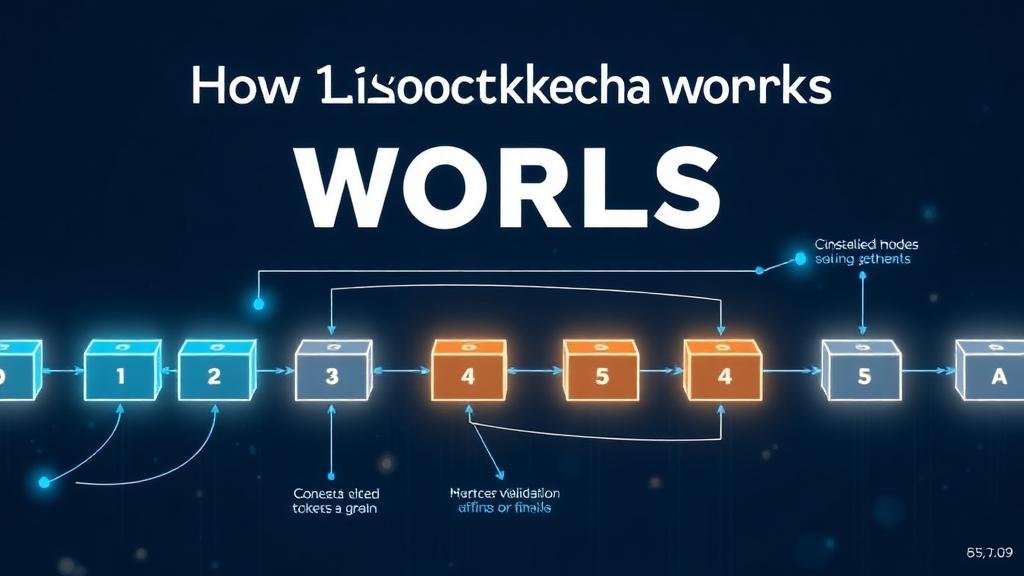
One of the early realities of crypto was fragmentation. Different blockchains were built for different purposes, using different rules, communities, and technologies. While this encouraged innovation, it also created silos.
Assets, applications, and users often remained confined to a single network. That’s where interoperability comes in. Understanding blockchain interoperability explained means exploring how separate blockchain systems can communicate and work together.
Why Interoperability Matters
Imagine if every email provider could only send messages within its own service. Or if bank accounts could only transfer money inside one bank.
That’s similar to how blockchains originally operated. Each network had its own ecosystem, with limited direct interaction.
As adoption grew, this separation became a practical challenge. Users want flexibility. Developers want access to broader liquidity and audiences. Interoperability aims to address these needs.
What Interoperability Actually Means
Blockchain interoperability refers to the ability of different networks to exchange information, value, or functionality.
This can include:
Moving digital assets between chains
Sharing data across networks
Allowing applications to interact beyond one blockchain
The goal is not to merge all blockchains into one, but to enable cooperation between independent systems.
The Technical Challenge
Blockchains are designed to be secure and self-contained. Each network has its own consensus rules and validation methods. That isolation strengthens security but complicates communication.
Interoperability solutions must ensure that data transferred between networks remains trustworthy. This often involves verification mechanisms, cryptographic proofs, or coordinated systems that track asset movement.
Balancing connectivity and security is the core challenge.
Bridges and Cross-Chain Systems
One common approach involves bridges. These systems allow assets to be represented on multiple networks.
For example, an asset locked on one chain might be represented by a corresponding token on another. When the asset moves back, the representation is removed.
Other approaches focus on protocols designed from the start to communicate across chains, enabling more integrated interactions.
Each method comes with design trade-offs and security considerations.
Why Security Is Central Here
Interoperability expands the surface area of blockchain ecosystems. When networks connect, risks can travel too.
If a bridge or cross-chain system is compromised, it can affect assets moving between networks. This is why interoperability infrastructure requires careful design and ongoing scrutiny.
Connectivity increases opportunity, but it also requires strong safeguards.
Benefits Beyond Convenience
Interoperability isn’t just about moving tokens. It can support broader innovation.
Developers can combine features from different networks. Users can access services across ecosystems. Liquidity can flow more freely, potentially supporting more efficient markets.
These benefits come from reducing isolation without removing diversity.
Decentralization Still Matters
A key question in interoperability is who controls the connections. Systems that rely heavily on centralized operators may be easier to manage but can introduce trust dependencies.
Decentralized approaches aim to distribute verification and control, aligning more closely with the philosophy of many blockchain networks. Again, trade-offs exist between simplicity and resilience.
Why This Matters for U.S. Readers
In the United States, digital systems often emphasize interoperability — from banking networks to communication platforms. Users expect services to connect.
As crypto becomes more integrated into broader financial and technological conversations, interoperability becomes essential for mainstream usability.
Understanding blockchain interoperability explained helps readers see how the ecosystem is evolving beyond isolated platforms.
A Balanced Perspective
Interoperability is a solution to fragmentation, but it’s not a magic fix. Complexity increases as systems connect. Security and governance questions become more layered.
Still, progress in this area reflects a maturing ecosystem trying to move from isolated experiments to interconnected infrastructure.
The Bottom Line
Blockchain interoperability is about enabling different networks to communicate and share value while maintaining their independence.
It supports flexibility, innovation, and broader participation, but requires careful design to manage risks. As the crypto ecosystem grows, the ability of networks to work together may shape how usable and scalable blockchain technology becomes.
Understanding this concept helps frame crypto not as separate islands, but as a developing web of digital systems learning to connect.